Trojan

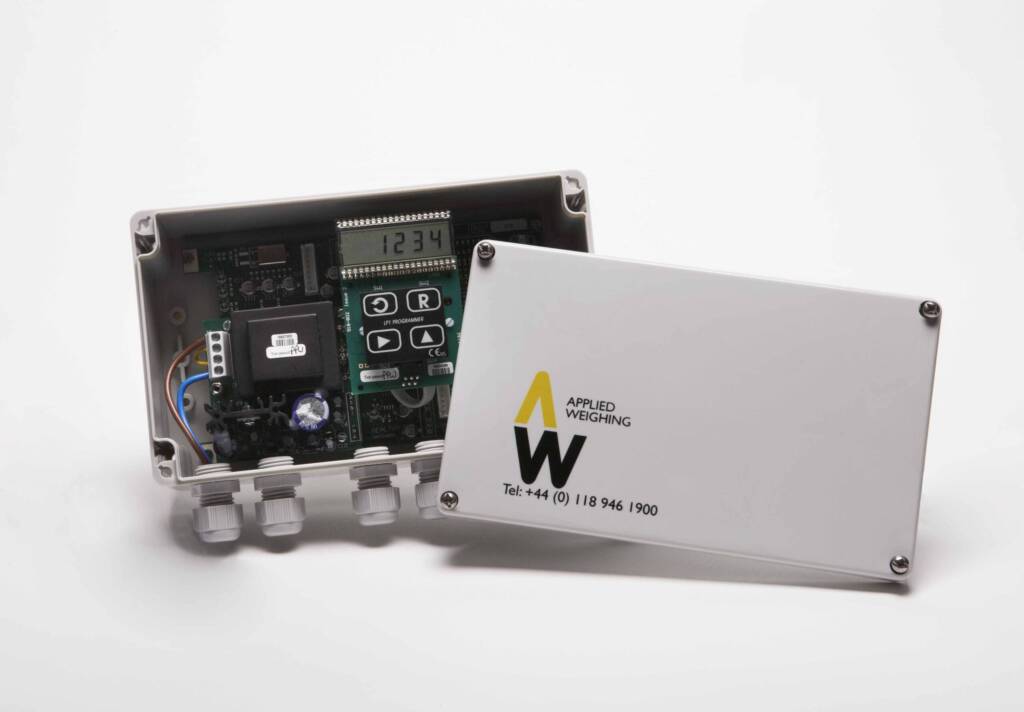
The Trojan load cell amplifier is suitable for applications requiring an analogue or serial retransmission of weight to a PLC or PC based system.

The Trojan has both 4-20mA and 0-10 volt scaleable outputs, and comes complete with an on board programmer.

Options include: RS232/485, dual setpoint, DIN rail mounting kit, 19″ rack, ABS IP65 glanded enclosure with clear lid option.

Supply voltage 110 or 240 vac or 9–32 VDC.
Features

  • High accuracy.
  • DIN rail, 19″ rack or Surface mount enclosure.
  • Fully programmable via keypad or serial port.
  • 4.5 digit LCD.
  • 10V @ 150mA excitation to drive up to 4 x 350 or 8 x 700 load cell.
  • Selectable gain options from 0.5 to 200mV/V.
  • Programmable in-flight compensation.
  • Auto calibration.
  • Isolated inputs and outputs.
  • High noise immunity.
  • Auto Tare.
  • 4-20mA and 0-10 volt outputs.

Options/Accessories

  • Trojan Load Cell Amplifier – Main board only
  • Trojan – 2 set point card
  • Trojan Load cell Amplifier, complete with ABS Enclosure – 110/240vac supply
  • Trojan 9-32vdc power supply
  • Trojan Enclosure transparent lid
To order, or find out more about this product, fill in the form here or call 0118 946 1900

Frequently Asked Questions

Our engineers are strategically positioned across the UK to ensure prompt responses when needed. Customers with a service agreement benefit from preferential call-out rates and response times. For more information, please contact ServiceDesk@aw.co.uk

Load cell cables can be cut to tidy the installation. However, it is advisable to ensure that each load cell in the system has cables of similar length. This helps maintain uniform load cell sensitivities and prevents potential cornering issues.

No. Each load cell in a weighing system should have the same capacity. Using load cells of different capacities will result in varied outputs among the load cells, causing weighing errors.

The calibration frequency will depend on your system and application; also, on your ISO requirements, if any. As a standard the calibration is carried out once a year, with more frequent checks on systems and more often recalibration if necessary.

Yes, Filtering is applicable for both display values and analogue values.